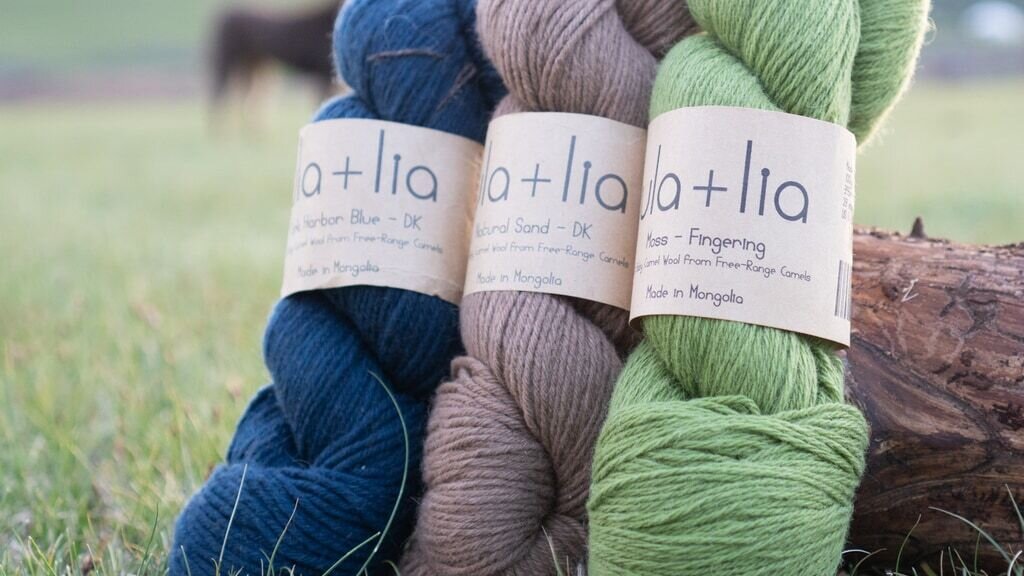
From herders to home, our yarns are made with exotic fibers from nomadic, free-range animals on the remote Mongolian plains
Latest Updates from Our Project:
Order Lock Date, Production Videos, and Dyed Fiber!
7 days ago
– Fri, Sep 25, 2026 at 02:52:34 AM
Hello Everybody,
Update time! Here's the vlog version for those that want to listen along:
Things are moving along smoothly, and I have quite a bit of production to show you this time. First, though, a couple of important administrative things!
BackerKit orders lock October 20th
I’m planning to lock orders in BackerKit on October 20th. After that, you won’t be able to change your survey answers or add anything to your order. Cards will also be charged that day for any add-ons you selected in BackerKit.
If you didn’t add anything,you won’t be charged again. Your Kickstarter pledge was already charged. This is only for additional items added through BackerKit.
If you need to make changes or add-ons, you can get back to your survey using the BackerKit link HERE.
I’ll send another update around October 14th or 15th to remind everyone before orders lock. I’m hoping I’ll have the finished sheep wool colors to show you by then, too, but that might be pushing it a tiny bit!
A correction on sock sizes
In the last update, I mentioned that we’re making another batch of Stone Fleece, our sheep wool and yak wool blend, along with another batch of wool socks. I also added sizes 46 and 47 to BackerKit. Unfortunately, there was a misunderstanding, and the factory we use can only make the socks up to size 44/45.
I’m sorry about that. I’m especially disappointed because the 44/45 size works fine for me, but 46/47 is really the size I’d wear if they were available. Fortunately for me, only four pairs were ordered in those sizes, so I'll contact those Backers directly to switch sizes if possible.
Washing and Dehairing
I got to visit the facility that washes yak wool, so I’ve included some video of the process. The yak in that footage isn’t our exact batch, but it gives you a good look at how it works. The fiber moves through these long lines of machines, getting cleaner and softer as it goes.
I also have footage ofcashmere dehairing. It starts out looking pretty rough, and by the end it’s this beautiful cloud of Mongolian cashmere. I see this process every year, but I still find it interesting to watch!
Dyeing and Spinning
All of our yak wool is dyed now, and some of it is already starting to be spun. The Burgundy and Olive are each dyed in two shades, one on the lighter Milk Chocolate yak and one on the darker Chocolate yak. Those shades will be blended together before spinning. You can see quite a difference between how the two natural colors take the dye, so I’m excited to see the finished yarn.
Burgundy Yak Wool
Olive Yak Wool
The Black yak is finished as well. It’s black, so there isn’t quite as much to explain there!
Black Yak!
For camel wool, I got a quick look at the Burnt Copper back at the factory. Aubergine is finished too, although it wasn’t there when I visited.
Burnt Copper Camel
Cashmere is moving quickly as well. I have a clip of me digging my hands into a huge bale of Natural Almond cashmere that’s going out to be dyed Sea Glass. The Sea Glass dyeing has since finished, and Cobalt is underway.
I also caught a little footage of the Natural Chocolate yarn being twisted at the factory. I arrived late in the day, after the carding line had shut down, but I’m hoping to film the whole line on my next visit. There will be more to show as the yarn moves through plying and hanking, too.
Sheep Wool
The remaining fiber we’re waiting on is the sheep wool. It’s at the washing stage now, and I’m hoping it will reach Ulaanbaatar in the next week or two for processing. It’s a little behind the other fibers, but sheep wool was always going to be spun last. There’s plenty of yak, camel, and cashmere to spin in the meantime, so at this point I don’t expect it to push back the production schedule.
Outro
So that’s where things stand. A lot is happening, dyeing is going quickly, and everything is moving along well. I’ll be back before the October 20th lock date with another reminder and, hopefully (maybe), the sheep wool colors!
If you need to make changes or add-ons, you can get back to your survey using the BackerKit link HERE.
As always, leave a comment or message if you have questions. If something isn’t working with your particular order or survey, please email me directly at [email protected] It’s much easier for me to pull up your order and sort it out that way.
You'll hear from me again mid October!
THANK YOU!
-Jon
More Platinum Gray, More Stone Fleece + Production Is Moving!
about 1 month ago
– Sat, Aug 29, 2026 at 02:55:11 AM
Hi Everyone,
Vlog version for those interested!
A few good updates this week as production is really starting to get moving.
First, all of our yak wool has arrived, and we actually ended up getting a little more than we originally ordered. Even better, the cooperatives had an additional 60 kg of Platinum Gray yak wool available.
We had already sold through the Platinum Gray inventory I had left from last year, so we're going to make another batch this season. If you went through your BackerKit survey and saw that Platinum Gray was sold out in either fingering or DK, don't worry, more is coming!
If you'd like to get back to your survey to make additions or changes, you can always request a new survey following the link here: Herders to Home 2026 Backerkit
We're also making another batch of our Stone Fleece Sheep/Yak 80/20% blend. We ended up selling out of a few sizes of the socks we had in stock that I wasn't quite expecting, so we're going to do another production run of socks. We'll make extra yarn so we can restock that yarn option as well.
Because Platinum Gray and Stone Fleece are both undyed colors, they'll also be available as 400g cones in addition to regular skeins.
Bigger Socks Are Coming Too
We're also adding a size 46-47 to the socks.
The current 44–45 fits me OK, but I have pretty big feet, so I figured it made sense to add another size up for anyone else in the same situation, or for anyone shopping for somebody with similar gorilla feet.
Natural Fawn Cashmere + Natural Chocolate Yak Are Finalized
I also finished the final blends for two of this year's new natural colors.
Natural Fawn Cashmere is a blend of our Almond and Warm Gray cashmere.
Natural Chocolate Yak is a blend of Dark Chocolate and Milk Chocolate yak.
I blended the fibers by hand and made small yarn samples so I could see what the final colors would look like, and both came out pretty much exactly how I had hoped. When the fibers are machine blended there will probably be a bit less unevenness, but they both have a lovely depth to them and I think they are going to make awesome finished yarns.
Production Update
As far as the overall production goes:
All of the yak wool has arrived.
We already have all of our camel wool.
Sheep wool washing is about to begin.
The last of the cashmere should arrive next week. We already have the darker half of the cashmere we ordered
With most of the surveys finished on Backerkit, I was able to get my final yarn order to the factory so we can start spinning.
We'll be starting with the natural sand camel wool, follwed by the Burnt Copper, so hopefully I'll have some more production photos and videos to start showing soon.
I'm also planning to visit the factory where they're washing fiber and finishing the cashmere de-hairing. I've missed most of the washing this season because it happens pretty quickly, so hopefully I'll be able to get some good footage of that, along with spinning, for the next update.
Want to Add or Change Something?
If you'd like to add any of the newly available colors, change something in your order, or get back into your BackerKit survey, I'll put a link below that you can use to have your survey link sent to you again.
If you still haven't received your BackerKit survey at all, you can also email me at [email protected] and I'll help get it sorted out. This is especially the case if you used an apple relay ID to sign up for the project.
As always, feel free to leave questions or comments below. If you have a question specifically about your order or BackerKit survey, sending me an email is much easier so I can directly pull up your survey/account.
Short but sweet for this one! I'll make another update in two or three weeks when I have some dyed colors, spinning videos, and hopefully washing videos as well.
THANK YOU!
-Jon
All Backerkit Surveys Are Out!
about 2 months ago
– Sun, Aug 16, 2026 at 01:13:56 AM
Hey Everybody,
Just a quick note to say that all surveys are out. If you still haven't received yours, please send me an email to [email protected] and we'll get it worked out. Especially if you used an apple relay email to sign up for Kickstarter, we will have to switch your email.
For more detailed information about Backerkit, please refer to the previous update HERE.
For reference, here are updated options for what's available on Backerkit:
THANK YOU!
-Jon
Backerkit Update, Yak Wool Swatches, Fiber Comparison Videos
about 2 months ago
– Fri, Aug 14, 2026 at 04:47:02 AM
Hey Everybody,
An update here as the Backerkit invites get sent out! Here's the vlog format for those interested in watching along:
Backerkit about to Open!
The big news for this update is that BackerKit is opening! As this update goes out, 5% of people will get their invites as a test. If everything goes smoothly with this 'Smoke Test', the remaining invites will go out on Saturday, August 15th at 9am Eastern Time, or about 24 hours AFTER this update gets sent out.
Please wait at least 24 hours after this update goes out before contacting me about not receiving a survey. It's important I give the smoke test time to work through to confirm there aren't any larger issues with the Backerkit setup in general.
Surveys will go out on Saturday, August 15th at 9am EST!
If you have not received your BackerKit invitation by that time, please check your spam/promotion/other folders. If you still can't find anything, please send me an email and we'll get it worked out!
In short, Backerkit is where you’ll select all of the details for your rewards, including your yarn colors, yarn weights, shipping address, and any additional items you’d like to add to your order.
If you’ve never used BackerKit before, it can sound a little confusing, but once you get into it, it’s pretty straightforward. If you made it through Kickstarter, I think you’ll find BackerKit is actually the easier part. The hardest thing will probably be deciding which colors you want!
A Quick Note About Apple Relay Emails
If you signed up for Kickstarter using an Apple Relay email address, BackerKit will not work properly with that address. You can confirm the email address used in the settings/account section of your Kickstarter profile.
If that applies to you, please email me at [email protected] with a different email address that you would like to use.
Please send this by email rather than through Kickstarter messages or comments. It makes it much easier for me to keep track of everything and get your account changed over.
Choosing Your Yarn
When you first enter BackerKit, you’ll be asked to confirm your pledge and then select the options for the rewards you chose during the Kickstarter campaign.
For example, if you pledged for four skeins of cashmere, you’ll select the color and weight for each individual skein. This means you can mix and match colors and weights within the same package, but it also means you will have to answer the same question 4 times. You will be able to see the skein number you are selecting on the right side of the screen.
After that, you’ll reach the add-on section where you can add any additional yarn or rewards you’d like.
One slightly strange thing about BackerKit is that if you add on another multi-skein package, it won’t ask you for the colors and weights immediately, but AFTER leaving the add-on section of your survey. Just keep clicking Next after the add-on page and the option screens will appear.
Important Note About Cones
A reminder that the 400g cones are only available in the undyed natural colors for each fiber.
For example, camel cones will be Natural Sand, cashmere will be Natural Fawn, Chocolate yak, and White sheep wool.
If you originally pledged for a cone but decide that you want one of the dyed colors instead, you’ll need to change your pledge from a cone to a skein package.
When you first enter BackerKit, there will be an option to change your pledge level. Here's screenshot showing where to do this.
Color Cheat Sheets
I’m also including a few things with this update that should make choosing your yarn a little easier:
A graphic showing all of the 2026 colors
A graphic showing our Past Production Stock that will also be available through BackerKit
A spreadsheet showing the available fibers, colors, and weights
Hopefully these make it much easier to see everything in one place before you start making your selections.
In the baby camel wool, the Sand and Dune are very similar. Here's a picture with the sand and dune together in the same hat prewash/dyeing where the difference is a bit more noticeable. The lighter sand color is on top.
Sand vs Dune
And remember, you don’t have to panic about making the perfect decision immediately. BackerKit surveys will remain open until around the middle of October, and you’ll be able to go back in and change your selections before I lock everything down.
Production Update
I also finally received the lab samples for our new Burgundy and Olive yak wool, along with the Burnt Copper camel wool, and I’m extremely happy with how they turned out.
I originally worked on these colors myself at home, but the dye engineer needed to recreate them in the lab so we could make sure everything would work properly once we move into full-scale production.
For the yak wool, we tested different blends of our two natural yak colors, Dark Chocolate and Milk Chocolate.
For Burgundy, we’re planning on using roughly:
70% Dark Chocolate / 30% Milk Chocolate (middle sample)
For Olive, it will be approximately the opposite:
30% Dark Chocolate / 70% Milk Chocolate (middle sample)
I’m also really happy with the Burnt Copper camel. It’s a little darker and earthier than some of the versions we’ve done in the past, which is exactly what I was hoping for.
Natural Fawn Cashmere + Chocolate Yak
There are still two natural blended colors that we need to finalize.
Our Natural Fawn cashmere will be created by blending our lighter natural cashmere with Warm Gray. I don’t know the exact ratio yet, but the final color will fall somewhere between the two.
The same goes for our Chocolate yak wool, which will be a blend of the Dark Chocolate and Milk Chocolate natural fibers.
Because these are blended natural fibers, the final colors may vary slightly from the graphics I’ve shown so far. I don’t expect any dramatic differences, but natural colors can shift a little once we actually start blending everything together.
Once those blends are finished, I’ll show you the final results. I'm hoping I'll have these sometime late next week or the week after.
Where Production Stands
The Warm Gray cashmere has already been delivered. The lighter natural cashmere should be ready toward the end of the month. We already have all of our camel wool, and sheep wool is about to start the washing process.
The Milk Chocolate yak wool is finished the dehairing process, and the Dark Chocolate should be completed next week and we can take final delivery of both at the spinning factory. I was hoping to have them this week in time for the update, but we still need a few more days.
Once BackerKit has been open for about a week, I’ll have a much better idea of demand for each fiber, color, and weight. At that point I can put together the main production order and things should start moving pretty quickly. The yak and camel natural colors will be ready for spinning immediately, and other colors will get sent out for dye.
This is really the last big step before production starts to take off!
A Little Fiber Testing
I’ve also been working on some new fiber comparison videos as part of a larger project to add more useful information to the ULA+LIA website.
Warmth Testing
The first was my experiment comparing the warmth of cashmere, yak, camel, and sheep wool.
In short, I filled identical bottles with hot water (176°F), put a different style of hat over each one, and let them cool under the same conditions.
Final temperatures:
Cashmere: 155°F (-22 Degrees)
Yak: 153°F (-24 Degrees)
Sheep Wool: 153°F (-24 Degrees)
Camel: 152°F (-25 Degrees)
Control (no hat): 142°F (-34 Degrees)
Wet Sheep Wool: 144°F (-32 Degrees)
So cashmere was slightly warmer, but all performed very similarly!
Gauge Testing
For the newest test, I knitted large identical pieces from each fiber using the same number of stitches and rows on my knitting machine and then compared the finished fabrics.
The results?
Weight:
Sheep, Camel, and Cashmere - 330 grams
Yak Wool - 350 grams
Length:
Cashmere and Camel - 165cm
Yak and Sheep - 152cm
Width:
All 40cm
Stretch:
Between 12 and 13% stretch for all fibers, returning to original size after a jiggle
In short, cashmere and camel are very similar, while sheep and yak are very similar. Cashmere and camel are about 9-10% longer for the same amount of rows, but similar otherwise. Yak wool also seems to be a bit more dense, but I can't completely rule out it was just a slightly uneven section of yarn.
That’s about it for this update!
Have fun going through BackerKit and choosing your colors. I’m always interested to see what everyone selects because it’s the point where I finally get a clear picture of what this year’s production is going to look like.
If you run into any problems with BackerKit, just email me at [email protected] and we'll get it worked out. Also feel free to join our ravelry group for more casual convo about the project!
I’ll be back with another update once we have the final natural blends in a couple of weeks!
THANK YOU,
Jon
Thank you for an incredible campaign!
2 months ago
– Thu, Jul 30, 2026 at 08:53:30 AM
Hey Everybody,
I wanted to write a quick update to thank everybody that has joined the campaign. If you've joined the campaign in the last 48 hours, please check out the updates that were posted this month about the progress of our production as well as an intro to Backerkit, and what to expect next.
As for what comes next, you'll get an email from me inviting you to Backerkit on August 15th. There, you'll choose your yarn weights, colors, and add on any other items or packages that you'd like to your original Kickstarter pledge.
In the meantime, please feel free to leave a comment or send an email to [email protected] with any questions.