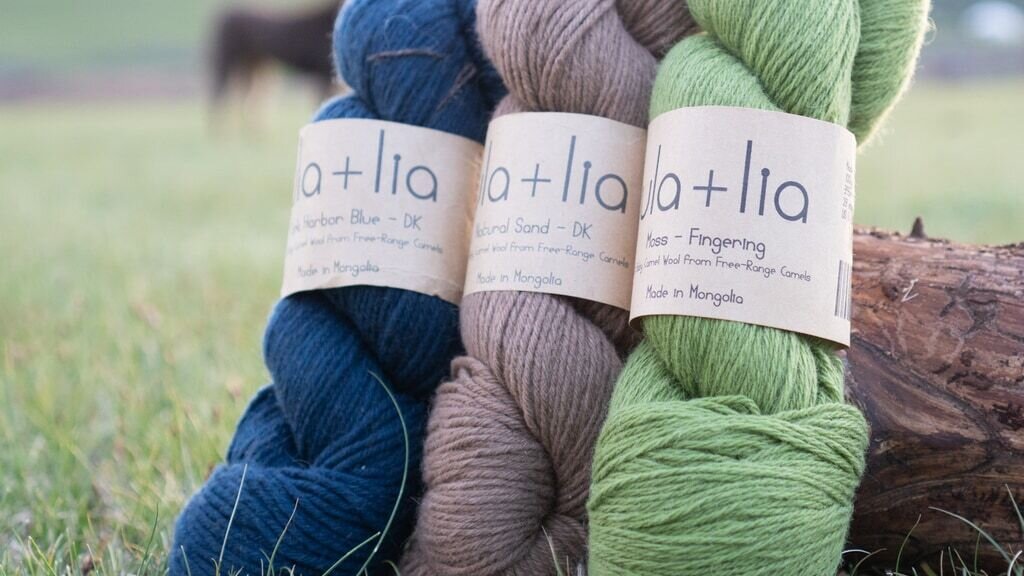
From herders to home, our yarns are made with exotic fibers from nomadic, free-range animals on the remote Mongolian plains
Latest Updates from Our Project:
Factory Visits, Camel Wool Blanket Details, and Backerkit Info!
2 months ago
– Tue, Jul 28, 2026 at 05:37:21 AM
Hey Everybody,
We're down to the final stretch of the campaign, so I wanted to share one last update before everything wraps up. Here's the vlog format for those interested:
Today I visited a couple of the factories we'll be working with over the next several months. It's always nice getting out there and seeing the materials in person instead of just talking about them. I also wanted to give everyone a final update on the camel wool blankets and explain what happens after the campaign ends!
Factory Visits
I started the day at the spinning facility where the blankets will be made. Our camel wool has already arrived, so I finally got to see the full batch that's waiting to be spun. It's a bit more than 500kg, not including some extra we still have from last year. It may not look very glamorous sitting in giant sacks, but the quality looks excellent and everything is on track!
I also stopped by the dehairing facility where they're processing yak wool. I was able to get some videos showing the cleaned fiber after the guard hair has been removed, along with the piles of guard hair and very short fibers that are separated during processing.
The first (dirtiest) steps:
The final clean wool:
The dirt/grit/super short hairs that are removed during the process:
And also the guard hair that's removed:
Those waste fibers don't just get thrown away! Depending on the material, they're often exported and/or used for products like insulation, pillow filling, and other industrial uses.
Here's an extra photo of cashmere ready to be dehaired. It's crazy how much it doesn't feel anything like the finished fiber before the guard hair and grit gets brushed out!
I had hoped to visit the washing facility as well today, but they won't be starting until tomorrow. I'll try to get footage there during a future visit!
Camel Wool Blankets
One of the most important things about today's update was to give some final and definite info about the blankets! For those new to the campaign, I went into depth in the previous update about why we decided to make these throws.
When I added them to Kickstarter after the update, I limited the reward to 50 pieces because that was roughly what I expected we'd make. Since then, they've turned out to be much more popular than I anticipated. It's important to me that everybody that wants one will be able to add on in Backerkit. I have a limit of around 200, but we could go to around 300 if needed.
The good news is that after talking with the factory today, there isn't really a production limit. We can make more if the demand is there. Because of that, I'll be offering a much higher quantity through BackerKit so everyone who wants one has a chance to add one.
The only thing I want to avoid is having the blankets delay the yarn export, and there are three options I thought of that can reduce the chance of this happening.
1 - Right now, all of the fibers are about ready for dyeing/spinning, the exception being sheep wool. Because all of the yarn needs to be spun before we can start the blankets, having a delay in a fiber or a color in particular can be a problem. If needed, it's possible the sheep wool won't be added to the blanket, or a color or two might not. This gives us some room if there's a delay in dyeing a color or receiving a fiber, although I don't think this will be an issue
2 - If we get above 125 or 150 pieces, I'm going to split the blanket production between different production facilities to reduce lead time. I'd prefer keeping it all in one place and with a place I have such a long history with, but spreading things out will keep lead times manageable.
3 - As an absolute last resort, I'd separate the export of the blankets from the yarn and send them out as separate packages. I'd particularly like to avoid this for Backers outside of the USA, but this would be a last resort if blanket production ends up taking a long time.
That being said, everything about the blankets today was confirmed as possible! After looking at brushed and unbrushed samples today, I've we're still sticking with the unbrushed finish. It's still incredibly soft, keeps the natural look of the fiber, and avoids some of the extra production steps that brushing requires. I have little doubt everybody will be really happy with the final fabric.
The blankets will measure approximately 150 × 200 cm and weigh right around 1 kilogram. Overall, I'm really happy with how they're coming together. I'm sorry for the quality of these photos, but taking pictures in the factory is incredible difficult!
But here's a photo of an unbrushed yak wool scarf with the type of fringe that will be on the ends of the blanket:
Here's an unbrushed camel wool blanket that was made with the same yarn weights that we'll be using. Our stripes will be thinner/solid, but it gives you an idea of the fabric, weight, and finish. Our camel wool fiber is also softer than what was used on this blanket, but I think it's a decent example to share:
Here's a reminder of our idea/goal for the blanket. These will be available to add on in Backerkit after the campaign ends!
What Happens After Kickstarter Ends?
Once the campaign finishes, Kickstarter will charge everyone's cards for their pledges.
Then... nothing happens for about two weeks!
On August 15th, you'll receive an invitation to access your personal account on Backerkit and complete your survey.
That's where you will:
Choose your yarn colors and weights
Add any additional rewards you'd like, including the camel wool blankets, at the same Kickstarter prices
Even after submitting your survey, you'll still be able to go back to your survey and make changes until orders are locked in October. I generally like to wait until all colors are dyed and I have final pictures of all the new colors before locking orders. I will give plenty of notice in emails and updates when this date is finalized. This is also when you will be charged for any additional addons. If you don't make any addons, you won't have any further charges.
Although October is the lock date, I'd really appreciate it if everyone could complete their survey as early as possible. The sooner I know the final color and weight selections, the sooner I can finalize dye batches and production quantities with the mill. It makes a huge difference in keeping everything moving smoothly.
Thank you all for making this such an incredible campaign. The next month or two will be the busiest part of the project, and I'll continue posting updates as production moves forward. It's always fun to share when new colors are coming out of dye and yarn is spinning.
As always, if you have any questions, leave a comment or send an email to [email protected].
THANK YOU!
-Jon
Almost Bedtime
Production Progress and Baby Camel Wool Blanket!
2 months ago
– Thu, Jul 23, 2026 at 06:48:43 AM
Hi Everybody,
With just one week left in the campaign, I wanted to give you another production update and share a new idea that I'm pretty excited about.
Here's the vlog format for those interested in listening or watching along:
First of all, thank you.
This year's campaign has honestly exceeded my expectations. With the higher fiber prices this season, I wasn't sure how people would respond, so seeing us already surpass last year's campaign has been incredibly encouraging. Whether you've backed several of our projects or this is your very first one, thank you for trusting us with your order!
Production Update
Last week was Naadam here in Mongolia, which effectively closes much of the country for the entire week. Even with that slowdown, we've made excellent progress over the last month.
Here's where everything currently stands:
Yak wool has been washed, and dehairing begins on July 28th, so it should be finished and ready for spinning after the first week of August or so.
Baby camel wool has been washed, dehaired, and ready for spinning
Dark cashmere has been washed, dehaired, and ready for spinning. Hopefully this and the camel wool will be delivered next week to the spinning mill.
Tan cashmere has finished washing and is waiting for dehairing once the factory completes its current production run, which will be at the beginning of August.
Sheep wool is now being shorn and is progressing on schedule.
One advantage of moving the Kickstarter to July this year is that I already have a much clearer picture of where all of the raw fiber is in production as far as final amounts.
I was hoping to include more photos and videos from the washing and dehairing facilities in this update, but Naadam delayed those visits. As soon as the next batches begin processing, I'll head out and share more behind-the-scenes photos and videos. The yak wool will be dehairing late this month, and our tan cashmere next month, so I'll get some videos of AT LEAST one of those! All of the washing that's done in UB is finished, but I'll get videos of washing in action when I visit to see the tan cashmere dehairing.
Yak Color Swatches Delay
The one thing I was hoping to have ready before this update was the final yak wool color swatches. Because of the holiday, our dye engineer is running behind schedule, so the final samples won't be ready until early next month.
The good news is that we've already confirmed all of the colors are achievable.
Since this year's yak yarn uses blends of both light and dark natural yak fibers, the exact dye recipes require a little more work than normal. The final colors may end up slightly different than the previews you've seen, but they'll be very close. Most importantly, the finished color swatches will be available before BackerKit opens, so you'll know exactly what you're ordering before making your final selections. I'm confident we will match the swatches I've made, but this is the only thing not completely buttoned up quite yet.
Here's a reminder for all the colors we are making this year!
Good News About Fiber Supply
As the campaign progressed as quickly as it did, I was considering choking off funding for the last week or so to make sure we wouldn't overextend on any fiber.
Since I make my fiber contracts early in spring, it can be a bit tricky to extrapolate Kickstarter sales and estimate Backerkit addons. Until Backerkit opens and I don't know what final counts are for new production -VS- what's sold from previous inventory. Most important for me is that if everybody orders from new production, I have enough to fill orders. This is also a bit tricky because I can end up having a lot more extra inventory than planned if a lot is sold from 'old stock' instead.
Historically, yak wool has been the fiber I'm most concerned about running short on, so this year I ordered almost a ton of it. Thankfully, we have plenty available and it's already here and accounted for in UB.
Cashmere was the opposite. Because prices increased so much this season, I placed a more conservative order, but I recently confirmed that we can still purchase additional cashmere if demand exceeds expectations. I don't think we'll need to, but it's always good to know there's some extra fiber to grab if we need to with our same sourcing.
A New Camel Wool Blanket
With the good stock of fiber, it lets us do some cool stuff for the end of the campaign!
When our camel wool was dehaired this year, the yield ended up being higher than expected. On top of that, the cooperative still has around 100 kg remaining from last year's harvest. So we also have a bunch of extra baby camel wool available if we need it.
Unlike cashmere, camel wool can sometimes be much harder for cooperatives to sell if they don't have direct buyers. I think more than any fiber, us creating a market for camel wool is most valuable to the herders. Cashmere (and to an extent yak wool) pretty much always has market clearing through middlemen. It's better for coops to sell to us because we pay a premium with our purchases that directly support the cooperatives and rewards them for the work they do with sustainability, breeding programs, sorting, etc., but if there aren't enough orders for international buyers or direct users like us, they can always still get the market rate by selling to middlemen. It's not ideal for a few reasons, but unsold cashmere sitting around generally isn't an issue. (The 'middlemen' thing is explained a bit more in depth in the video around the 6:13 mark).
When I was asking about extra availability of fiber this year, the coop director told me about the difficulty they are having with finding a market for the extra camel wool. I have a pretty large inventory of cashmere and camel wool at the moment, so I don't want to just order more yarn, so it brought up the idea of doing a Kickstarter Baby Camel Wool Throw.
The spinning mill we work with also has traditional Toyota weaving looms and makes blankets in house, so we're going to experiment with producing a limited run of woven camel wool throw blankets.
Here's a quick vid of the weaving in action that I took mannny years ago:
The design will feature a natural camel background with fine pinstripes using all of this year's campaign colors, a sort of keepsake representing the entire 2026 collection.
These blankets will be:
Approximately 150 × 200 cm
Around 1 kg of fiber
Unbrushed
Priced at $205
Normally woven blankets are brushed after weaving to create an extra fluffy finish, but we're intentionally leaving these unbrushed. They're a little more rugged, but I think they have a unique character that fits this project perfectly. This also keeps the extra steps involved to a minimum, as I don't want to add a lot of complications near the end of our production cycle.
They'll be available as an add-on through BackerKit, so there's no need to change your existing pledge if you're interested.
Looking Ahead
Over the next week I'm hoping to:
Visit the spinning mill once the next fiber deliveries arrive (hopefully) and finalize blanket details.
Publish one last update before the campaign ends with more information about BackerKit and selecting your yarn colors and weights.
If you have any questions, feel free to leave a comment, send an email to [email protected], or stop by our Ravelry group for some more casual discussion.
THANK YOU!
-Jon
Update #1 - Our Yak Fiber, Countryside Photos, and Cashmere Description Correction
3 months ago
– Sun, Jul 05, 2026 at 04:44:41 AM
Hey Everybody,
Coming up on an incredible start to the project and wanted to send out an update and thank everybody for their support! Here's the vlog format for those interested:
For those interested in reading, I'll still post the same info in text as well. This one was a bit long because I talked about cashmere technicalities a lot, but I'll try to be more concise in the future. I also included a bit of a brand intro in the video if this is your first year finding us. It's timestamped if you just want to jump to countryside sharing stuff or different sections. Here's what I'm covering in this update:
Cashmere Description Correction
Yak Wool Raw Fiber
Countryside Photos
General Progress
Cashmere Description Correction
The short of it:
My apologies here, but I had it listed in the reward description that we would be doing a pilot program this year with baby cashmere. This was in the reward description from last year and I failed to edit it out when making the reward descriptions this year. Unfortunately, Kickstarter doesn't allow the editing of rewards after people have already pledged, so I had to end those rewards and create new ones with the updated description.
You don't need to do anything as far as changing your reward, but I do want to be clear that all of our cashmere this year is the baby cashmere and cashmere from adult female goats blended together, not separated.
The Long of It: Was the baby cashmere actually softer/worth it?
There are a few reasons we're not doing the 'baby cashmere' anymore. While the almond and vanilla cashmere from last year were incredibly soft, I think that's more to do with the cashmere from the breed that produces that cashmere and from the region we source from. The area, "Bumbugur," is kind of famous in the cashmere industry for its quality to begin with, and still where we are sourcing. And while baby cashmere may have a slightly thinner micron (thickness) count, there are a lot of other factors that go into cashmere softness and quality, although micron tends to get the most mention because it's the easiest to measure, although I find testing results to not be exactly replicable themselves.
Over the years, I've particularly noticed that from the white, tan, and warm gray fiber bases, the warm gray and tan tend to feel softer, regardless of micron. The tan and warm gray tend to have more halo and be more supple, leading to a softer hand. The white/cream cashmere tends to feel a bit more silky and less halo, so it lacks a bit of the classic cashmere feel that I think most people are looking for, but might also wear a bit harder over time. Because of that, I've moved towards just using the warm gray and tan for dyeing as I think we want soft as possible from cashmere. This limits us to somewhat darker and earthier colors, but I think it's worth it for added softness.
Washing and finishing is also incredibly important with how soft your yarn/finished items turn out. Our yarns have the spinning oil in them, so it's important to wash either the yarn or the final object in HOT water with plenty of soap, and wash it rather hard! The harder you wash, the softer your final item is going to be. I've had reports from the last year's yarn that the 100% Baby Cashmere was softest, the Baby/Female blend was softest, and the Crimson (dyed on female warm gray cashmere) were softest. Is it the cashmere, the stitch, or the finishing that make the 'softer' results? It's hard to say!
The last thing is also the added difficulty of having different sourcing for a particular color. I've already made my fiber contracts and don't know the exact breakdown of color demand until we open Backerkit. Generally, I make larger batches of colors that sell more, so I pull fiber from less popular colors to do so. When I just had one 'baby cashmere' batch, I couldn't pull from other colors if demand was higher than expected, and I couldn't get more. I BARELY had enough last year for the orders and it was extremely stressful watching orders go up. In the future, if we ever decide to go back to 'baby cashmere', it will have to be all or nothing with the entire fiber order. For now, I'm not convinced that the juice is worth the squeeze, as far as increased difficulty of sourcing and the higher prices.
So in short (of the long part), the baby cashmere may or may not have been softer, but there are a lot of variables that go in to soft cashmere, and I'm skeptical that the baby cashmere makes a measurable difference in that equation. So, probably not worth the extra price and stress of doing separate sourcing for it.
Yak Fiber/Sourcing
Not a ton to say here, but I just got back from a quick countryside trip before launching the campaign and was able to see our yak wool. In previous years, our yak wool was from 1-3 year old yaks. This year, it's down to 1-2 year old yaks, so we'll see how that changes the softness of the fiber or not. If you read the cashmere description, you'll see I'm skeptical here!
But here's what fiber looks like when it gets in from the herders!
It's pretty much floor to ceiling here, somewhere around 2500kg. This has some of the gray in it as well which we aren't taking this year, but the rest of the black and brown is ours. I was actually surprised that the fiber here was still quite soft and didn't have as much guard hair as I usually see in freshly brushed yak down. Yeild is usually around 25% for yak wool, but if guardhair/organic material is lower, yeild is higher, which might be the case from this haul.
From here, the colors get hand sorted, and then will get sent into Ulaanbaatar for first washing and then dehairing to remove all the guard hairs. After that, we're ready for spinning!
Some Countryside Photos
I also spent a bit of time out with yak herders. My friend and I are working together on a bit of a fashion label using our yarns, so we also wanted to get some lifestyle photos. One of the kids there was taking us out doing some horseback herding, and that's always a pretty cool scene. He's 10 and doesn't need a saddle doing his herding!
Here's a video of bringing the horses back:
There's always interesting things to see. Here's one of the first steps in drying out one of the many dairy products herders make, accompanied by a practical handwashing station on the left.
General Progress
Not a lot to show here yet other the the yak fiber! Our cashmere is in Ulaanbaatar and is slated for washing soon. Next week, Naadam, a large national holiday in Mongolia, will put the skids on things for a few days. By the end of the month, I should have photos/videos of the washing and maybe dehairing of our cashmere. Cashmere finishing is always first, followed by other fibers. Expect more there hopefully by the time the campaign ends!
But I think that's about it for me! The campaign is going great so far and I'll probably start doing some advertising around the end of this week to drive a bit more traffic depending on if it looks like we're stalling out or not. We're on our way to meeting all of our stretch goals, and just have the last for Sea Glass (previously known as Robin's Egg) at $125,000. Hopefully we keep up some steady progress!
As always, please let me know if you have any questions, comments, or concerns. Our Ravelry Group is a great place for casual conversation about the project in general. Email is always great as well at [email protected].